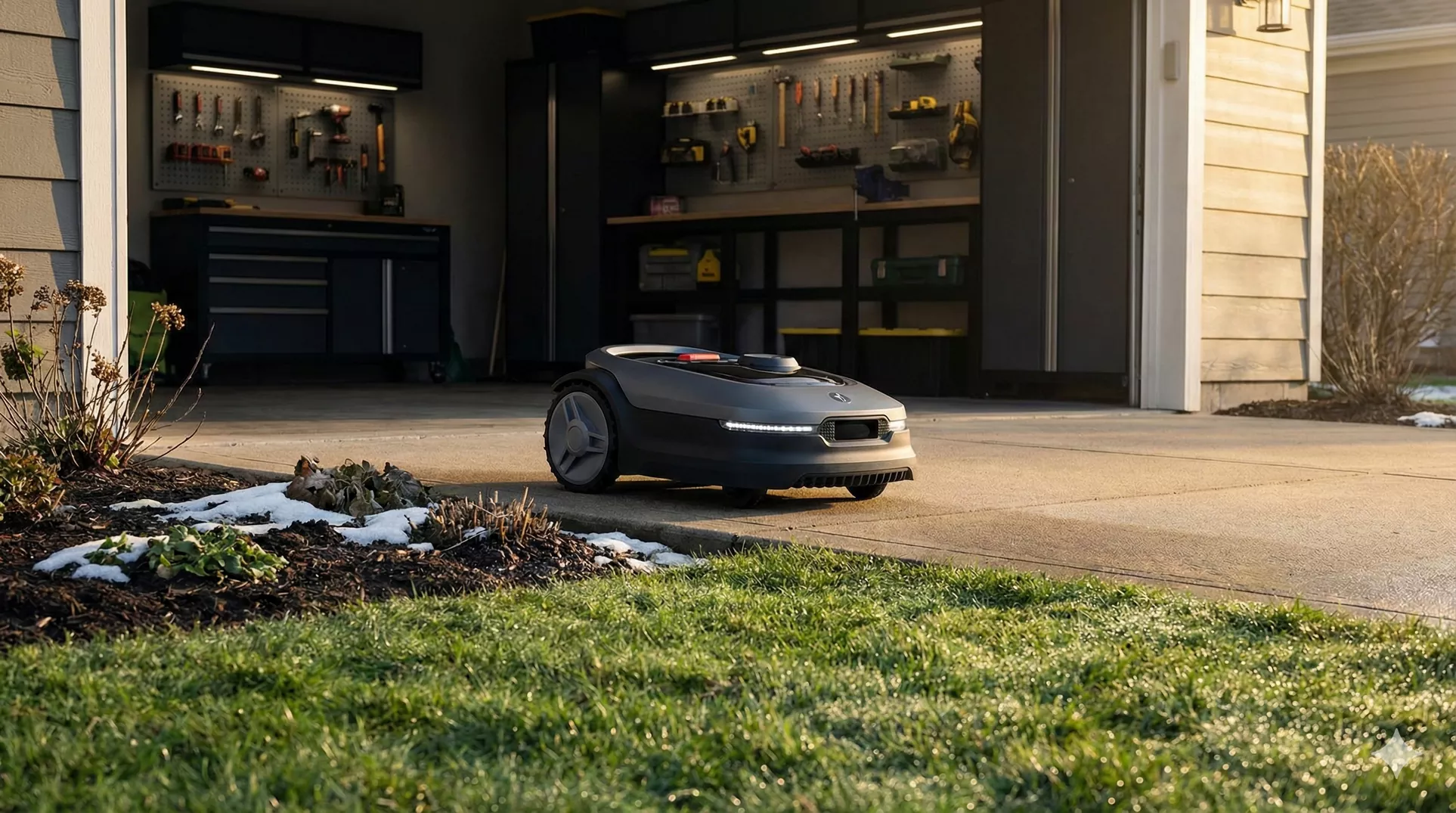
Spring is finally on the horizon. The snow is melting, the days are getting longer, and your lawn is slowly waking up from its winter dormancy. It’s tempting to drag your robot mower out of the garage, hit “Start,” and let it do its thing.
Stop right there.
Your robot mower is a highly sensitive piece of outdoor tech. After months of hibernation, throwing it directly onto a thawing, wet lawn is a recipe for disaster. From battery lockouts and massive firmware updates to shifted RTK antennas and torn-up turf, the first mow of the season requires careful preparation.
Here is the ultimate Robot Mower Lab checklist to safely wake up your machine and prep your yard for the 2026 mowing season.
The Indoor Hardware Check
Before the mower even touches the grass, we need to make sure the hardware survived the winter.
- Battery Resurrection (The Slow Wake-Up): Lithium-ion and LiFePO₄ batteries hate sitting idle for months. Do not immediately send the mower out to work on a low battery. First, plug in your charging station (ideally still indoors or on a dry patio). Dock the mower manually and let it charge to a full 100%. Watch the app to ensure there are no BMS (Battery Management System) error codes. A slow, uninterrupted initial charge is crucial for rebalancing the battery cells.
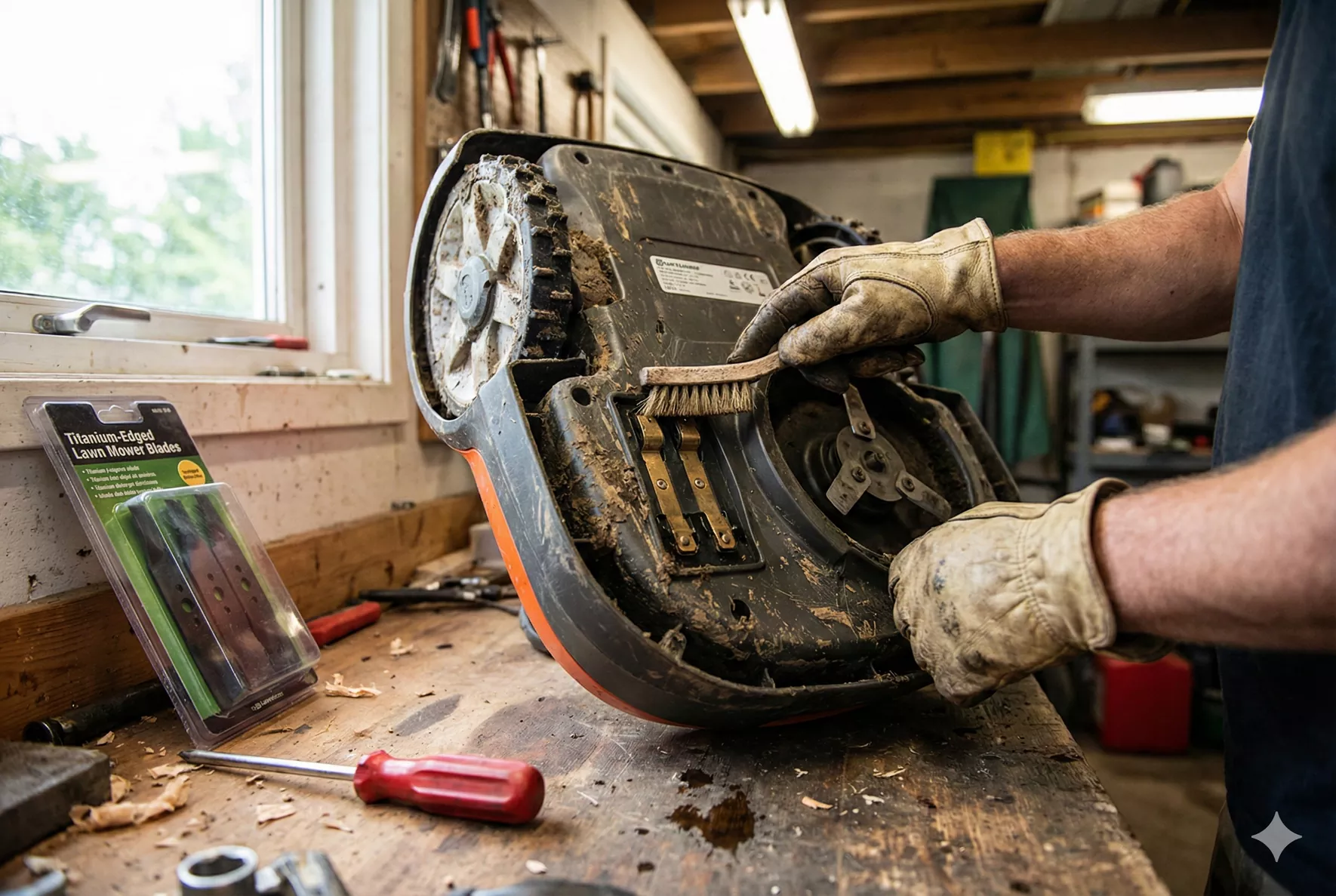
- Fresh Blades for Fresh Grass: Spring grass is tender and highly susceptible to disease. If you left last autumn’s dull, sap-covered blades on the cutting disc, they will tear and shred the new grass tips instead of slicing them cleanly. Torn grass tips turn yellow and invite fungus. Swap in a brand-new set of razor blades before the first mow.
- Clean the Charging Contacts: Months of sitting can cause microscopic oxidation on the metal charging contacts of both the mower and the base station. Use a fine-grit sandpaper or a quick spray of electrical contact cleaner to gently polish the metal plates. This ensures your mower won’t get stuck in a “docking loop” because it can’t sense the current.
The Digital Spring Cleaning
The hardware might be ready, but the brain needs an update.
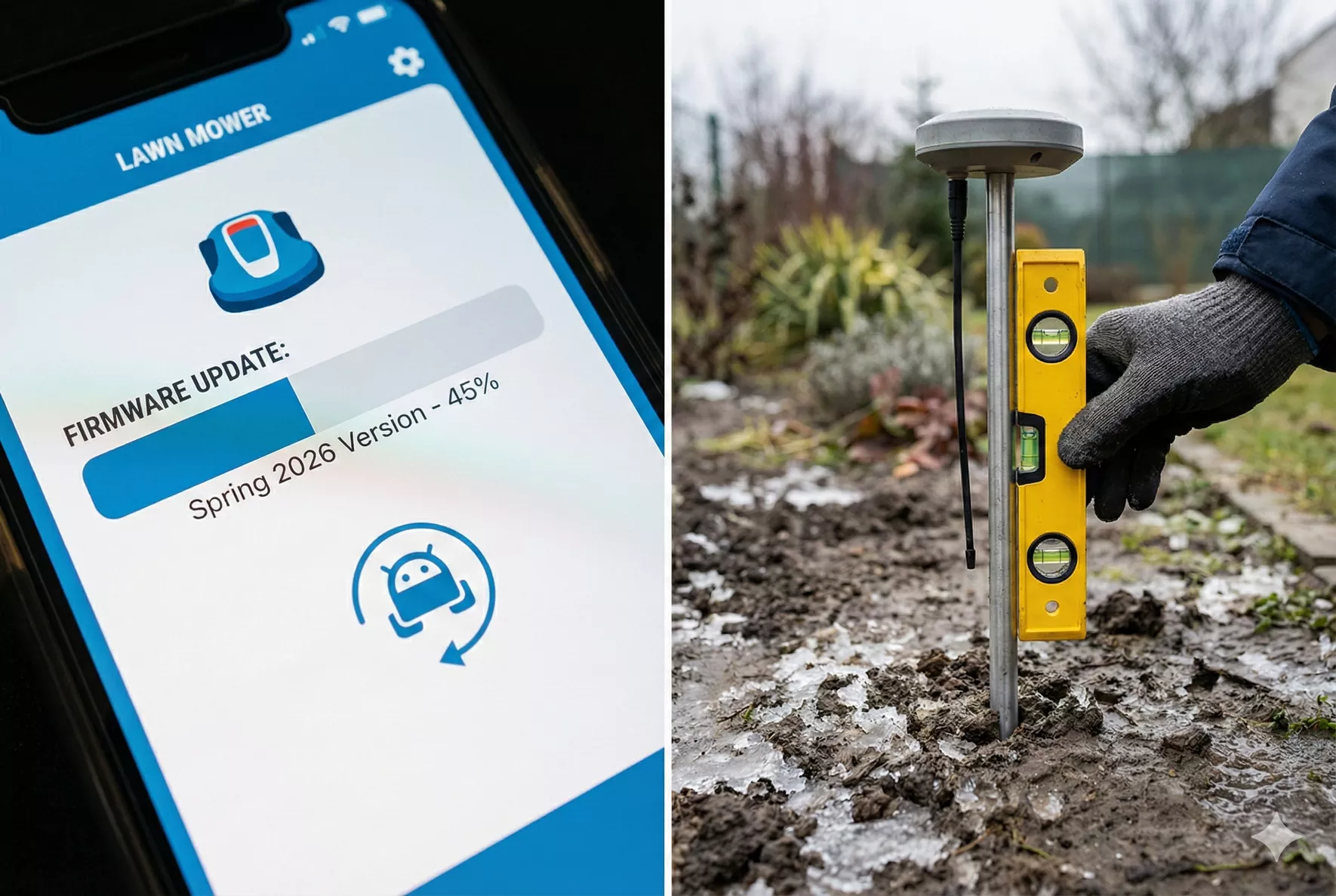
- The Winter Firmware Dump: Companies like Segway, Mammotion, and Husqvarna don’t sleep during the winter. They spend the off-season coding bug fixes and adding new features. Your mower’s software is likely months out of date. While the mower is still near your house (and your strong Wi-Fi router), open the app and run all firmware updates for both the mower and the RTK antenna.
- The RTK Antenna Check (Crucial for Northern Climates): If you live in a region that experiences harsh winters and deep ground freezes—like the Midwest—your soil goes through intense freeze-thaw cycles. This phenomenon, known as frost heaving, expands and contracts the soil. If your RTK antenna pole is staked into the dirt, there is a very high chance it shifted, tilted, or sank over the winter.
- The 1-Inch Rule: If your RTK antenna shifts even one inch, your entire digital map shifts with it. Your mower might suddenly think your flowerbed is the lawn. Check the pole with a bubble level. If it’s no longer perfectly plumb, straighten it and remap your boundaries.
The Yard Assessment
Now, let’s look at the battlefield. Early spring lawns are delicate.
- The “Mud Test”: Modern AWD mowers (like the Luba 3 or Segway X4) are incredible, but they are heavy. When the top layer of soil thaws but the ground underneath is still frozen or saturated with meltwater, the lawn becomes a sponge. If you send a heavy, treaded robot out too early, it will rut the yard and tear the turf down to the mud. Walk on your lawn first. If the ground feels squishy or your shoes leave deep prints, wait another week.
- Clear the Winter Debris: Winter storms and ice bring down branches and large twigs. Walk your entire property and manually clear anything larger than a pencil. While some mowers have AI Vision to avoid big obstacles, small, hard debris can easily bypass the cameras, shatter your new blades, or crack the cutting deck.
- Fill the Potholes: Check for new divots, molehills, or sunken areas created over the winter. Fill them with a mix of topsoil and sand. A smooth yard prevents the robot’s front wheels from getting trapped.

The First Cut of the Season
When the ground is finally firm and the grass reaches about 3 to 4 inches, it’s time to unleash the robot.
- Set it HIGH: For cool-season grasses typical in northern climates (like Kentucky Bluegrass or Fescue), do not scalp the lawn in the spring. Set your robot mower’s cutting height to its maximum setting (usually around 3.0 to 4.0 inches). Leaving the grass tall encourages deep root growth, which helps the lawn naturally choke out early spring weeds.
- The Rule of Thirds: Never cut off more than one-third of the grass blade at a time. Let the robot do its job as a “maintainer.” You can gradually lower the cutting height over the next few weeks as the lawn thickens.