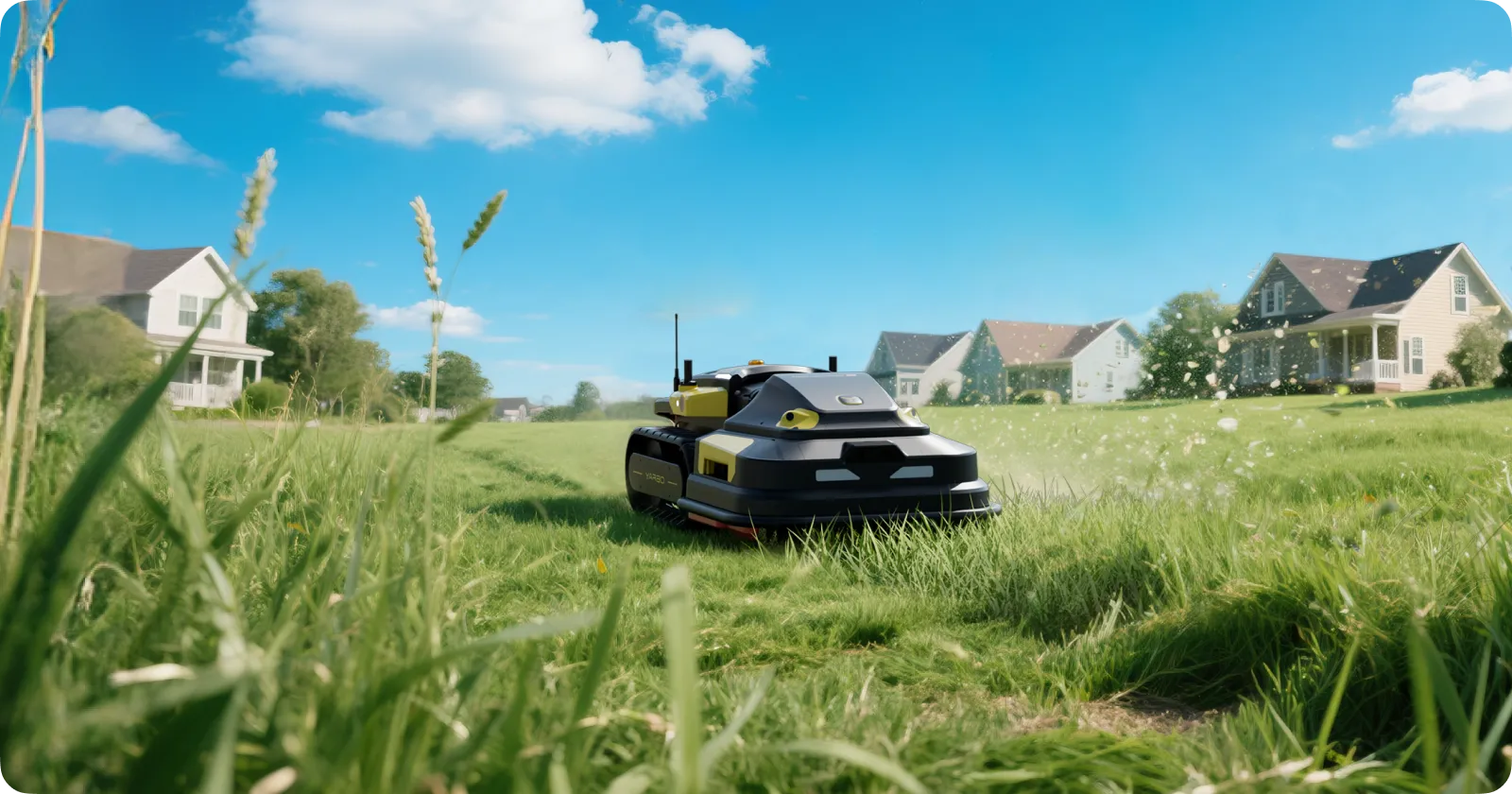
In the world of robotic lawn care, there are toys, there are tools, and then there is Yarbo.
While most of the industry is fighting over suburban quarter-acre lots with sleek, lightweight machines, Yarbo has built a 198-lb, tracked behemoth that looks more like a Mars Rover.
With price tags of $4,999 for the standard Lawn Mower and $5,999 for the Pro model, these are the most expensive consumer robot mowers on the market in 2026. Yarbo claims these machines can handle massive 6.2-acre estates and conquer 35-degree slopes.
But before you drop $6,000 on a lawn mower, we need to have a serious conversation about reality. Is the Yarbo a revolutionary piece of heavy-duty engineering, or is it a 200-pound paperweight waiting to happen? Let’s break down the specs, the real differences between the two models, and the massive after-sales risks you are taking.
The Spec Sheet: Heavyweight Battle
The Battery Marketing Illusion
If you glance at the spec sheet, you might think the Pro version has a drastically different battery because it says “1.38 kWh” instead of “38.4 Ah”. Let’s do the math: 36 Volts × 38.4 Ah = 1382.4 Watt-hours (or 1.38 kWh).
Both machines have the exact same physical battery capacity. Do not pay the extra $1,000 thinking you are getting a larger battery.
What Does the $1,000 “Pro” Upgrade Actually Buy?
If the battery is the same, why does the Pro cost $5,999? Yarbo dumped that money into extreme, professional-grade hardware for the worst possible terrains.
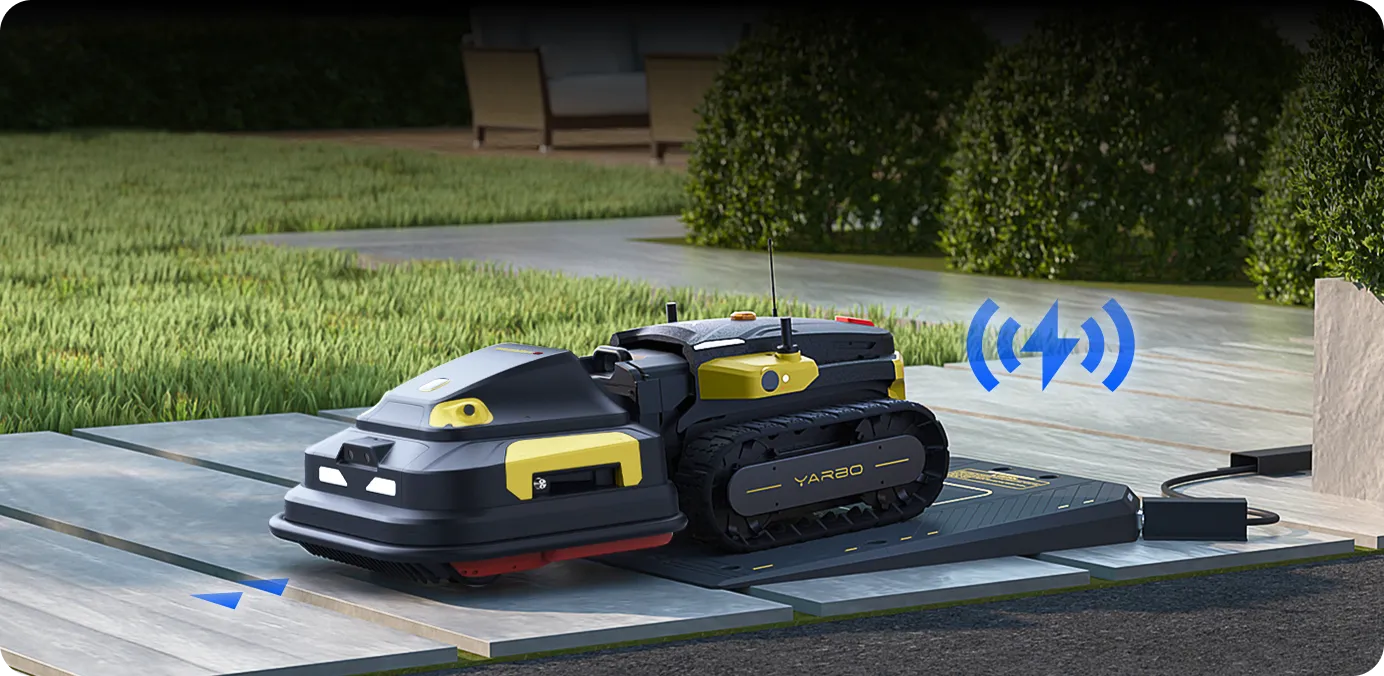
- 2500W Peak Power & Swappable Blades: The standard model uses dual 300W motors. The Pro model jumps to a massive 2500W peak output. You can swap the traditional cutting discs for a heavy-duty Straight Blade. With that kind of power, the Pro model is basically a robotic brush hog. It will slice through thick weeds and small saplings that would instantly choke a Luba 3.
- Wi-Fi HaLow: If you have a 6-acre estate, standard Wi-Fi will not reach the edge of your property. The Pro model includes Wi-Fi HaLow, a low-frequency protocol designed specifically for ultra-long-range outdoor transmission.
- IPX6 Waterproofing: Built for harsh environments, the Pro can withstand heavier water jets during cleaning.
The Lymow Comparison: Dedicated Mower vs. Modular Rover
When discussing tracked robots, we have to mention the Lymow One Plus.
Lymow is a dedicated, heavy-duty tracked lawn mower. It is designed to do one thing: cut grass on terrible terrain.
Yarbo is fundamentally different. It is a Modular Rover. The “Core” of the Yarbo is just a driving base. In the summer, you attach the mower module. When the snow starts falling in states like Michigan, you remove the mower and attach a Two-Stage Snow Blower module.
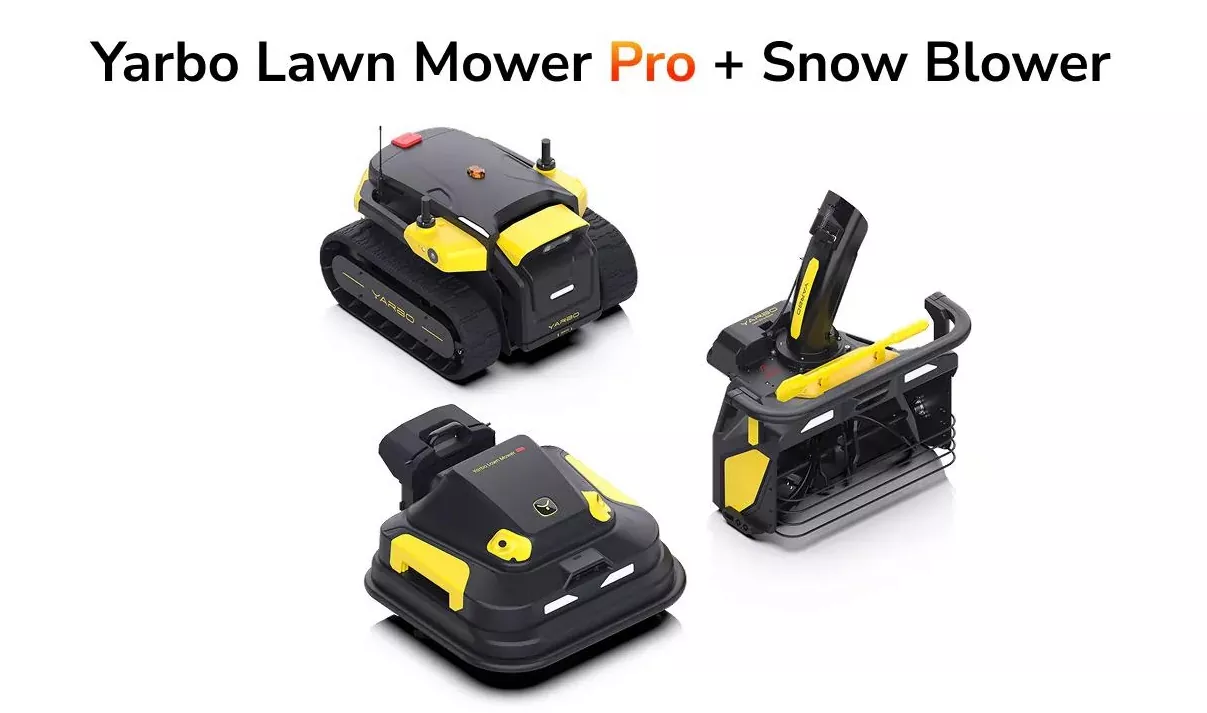
If you do not intend to use the snowblower or leaf blower attachments, buying a Yarbo is a massive waste of money. You are paying a premium for modularity you won’t use.
The Elephant in the Room: The 200-lb Support Nightmare
Here is the brutal reality of buying a $6,000 robot from a tech startup.
What happens when it breaks?
A standard Segway or Mammotion mower weighs about 40 lbs. If a wheel motor dies, you put it in a cardboard box and ship it to a repair center.
The Yarbo weighs 198 lbs. You cannot lift it. You cannot box it up and drop it off at FedEx. If a track snaps, a drive motor burns out, or the mainboard fries, you are stranded. Yarbo does not have a sprawling, established network of local brick-and-mortar dealerships like Husqvarna. You are entirely reliant on remote customer support mailing you heavy replacement parts, and you will likely have to perform complex mechanical repairs yourself in your garage.
Furthermore, tracks are brutal on turf. When a 200-lb tracked vehicle makes a zero-degree turn on soft, wet spring soil, it will tear your grass down to the dirt.
The Verdict: Is It Worth The Risk?
At $6,000, you are entering the price territory of a commercial zero-turn riding mower or a sub-compact tractor.
🛑 Who Should Avoid Yarbo?
Most homeowners.
- You want perfect turf: The 200-lb tracked steering will scalp and scuff delicate grass during turns.
- You expect local dealership support: If it breaks, be prepared for DIY repairs and shipping headaches.
- You don’t get snow: If you only need to cut grass, you are overpaying for a modular system.
❄️ Who is Yarbo Actually For?
Wealthy Northern Estates.
- You need a year-round robot: The ability to swap to a heavy-duty snowblower is its true selling point.
- You have terrible terrain: 35-degree slopes and rough brush that would destroy a standard mower.
- You have deep pockets: You can afford the $6,000 gamble on an emerging brand.