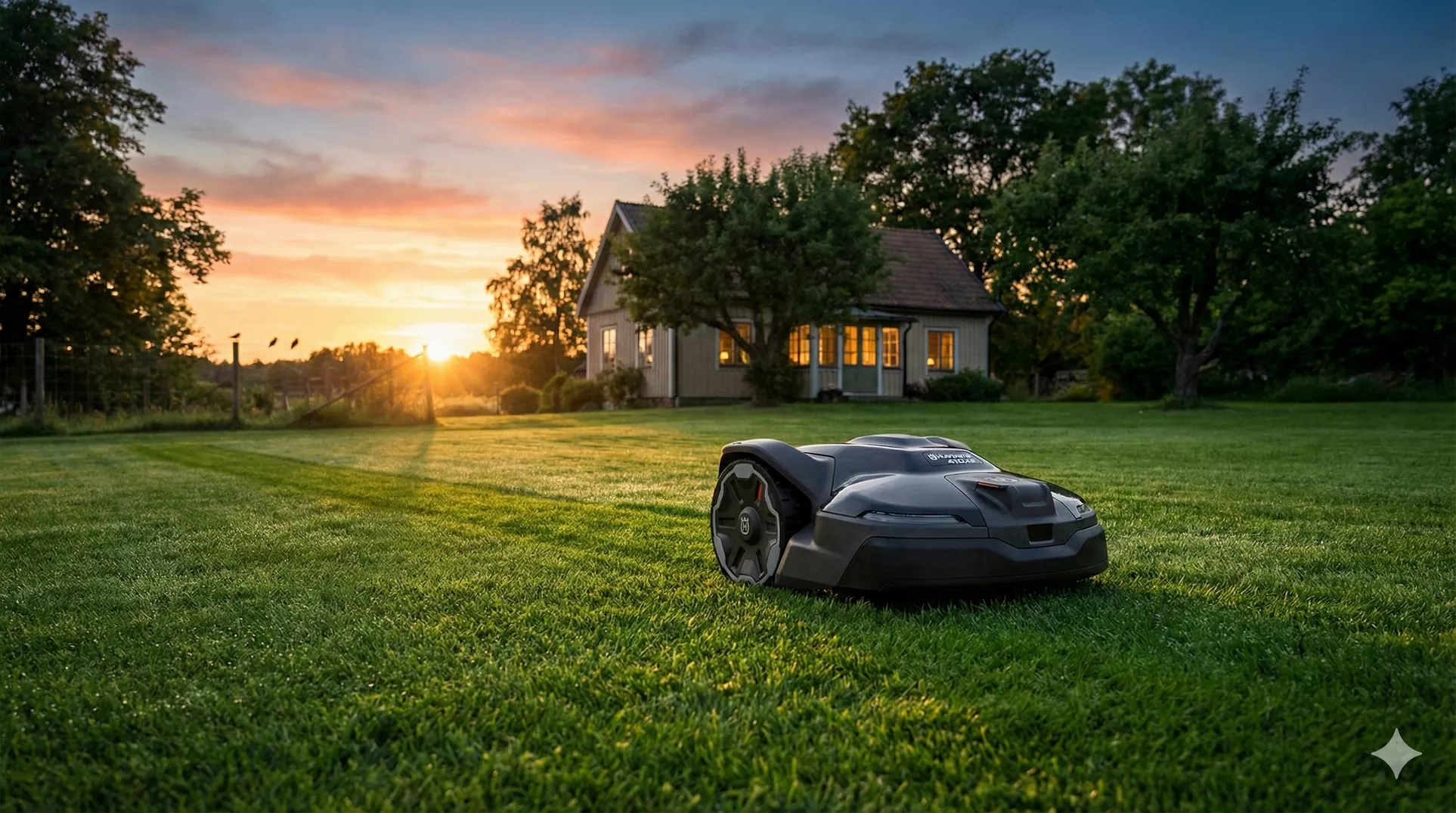
Whenever a new robot mower hits the market claiming insane specs—like the Segway X4 or Mammotion Luba 3—they always compare themselves to one brand: Husqvarna.
Husqvarna invented the robotic lawn mower over 25 years ago. They are the established king of the industry. Their new Automower 4-Series (410iQ, 420iQ, and 440iQ) brings their cutting-edge EPOS (Wire-Free) technology to the residential market.
But here is the elephant in the room: The pricing is aggressive.
- 410iQ: $2,999
- 420iQ: $3,499
- 440iQ: $4,299
When a $2,500 Segway offers a 17-inch cutting width and 84% slope handling, why would anyone pay $2,999 for the base 410iQ with a 9.4-inch cut and 45% slope?
At Robot Mower Lab, we look beyond the spec sheet. Today, we are breaking down the 4-Series to see if the legendary Husqvarna reliability justifies the premium price tag.
The Core Specs (Taking the 410iQ as the Baseline)
Let’s look at what $2,999 gets you with the entry-level 410iQ, designed for half-acre lawns.
Husqvarna vs. The “Spec Monsters” (Why pay more?)
If you compare the Husqvarna 410iQ to the Segway X4 or Mammotion Luba 3 purely on numbers, Husqvarna looks like a bad deal. It charges slower (108 mins), cuts narrower (9.4 inches), and handles less extreme hills (45%).
But here is why thousands of homeowners—and professional landscapers—still choose Husqvarna:
1. Radar Detection vs. Camera Vision While Segway and Lymow use cameras (AI Vision) to avoid obstacles, Husqvarna uses Radar.
- The Advantage: Cameras can be blinded by direct sunlight, thick dust, or total darkness. Radar sends out radio waves, meaning it detects objects perfectly in pitch black, heavy fog, or when the mower is covered in grass clippings. It is military-grade reliability.
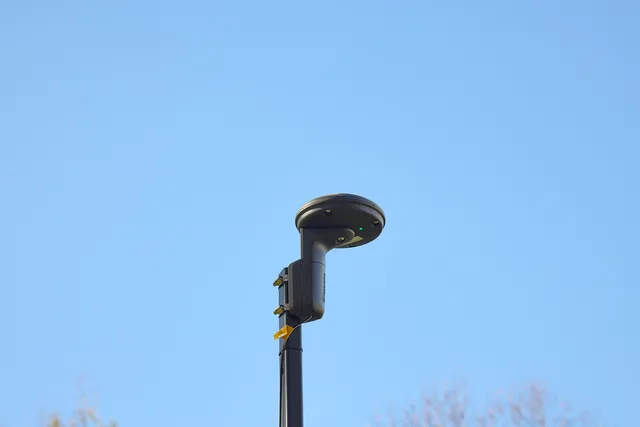
2. The EPOS & Wire Hybrid System The 4-series supports “Virtual wire” (Husqvarna’s EPOS satellite system) BUT it also supports “Physical wire”. If you have a massive oak tree where satellites absolutely cannot reach, you can lay a small section of physical wire to guide it through the dead zone. Most new startups force you to be 100% wire-free, which fails in severe dead zones.
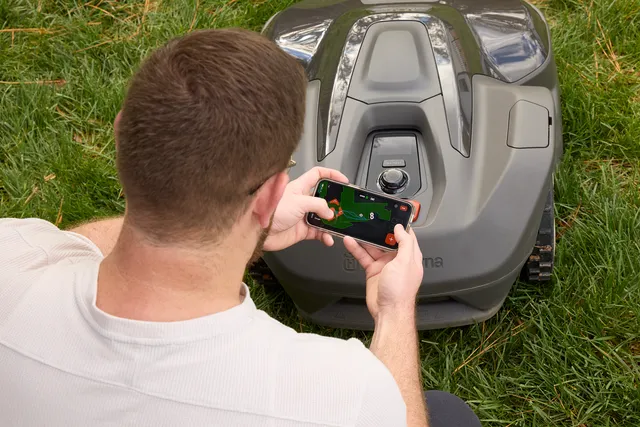
3. Software Maturity & The App Automower® Connect is not a beta test. It doesn’t crash. It doesn’t forget your map after a firmware update. You are paying for 25 years of algorithmic refinement. When a Husqvarna goes to its charging station, it docks perfectly 99.9% of the time.
4. Ultimate Theft Protection The 4-series comes with cellular-based GPS Theft Tracking, a GeoFence, a loud alarm, and a PIN code. If someone steals it, the machine bricks itself and you can track it on your phone.
The 410iQ vs. 420iQ vs. 440iQ
Which one should you buy? The physical chassis of these three mowers is very similar (all feature the color TFT display and IPX5 waterproofing). The difference lies in Battery Capacity and Software Limits.
- The 410iQ ($2,999): Built for 0.5 acres. Perfect for standard suburban lawns.
- The 420iQ ($3,499): Engineered for up to 0.8 acres. It has a slightly faster cutting efficiency and is designed to spend less time on the lawn for mid-to-large properties.
- The 440iQ ($4,299): The estate model. Handles over 1 acre. It’s tuned to run continuously with maximized area capacity.
Part 4: The Buying Verdict – Is it for you?
Buying a Husqvarna is like buying an Apple product. You aren’t paying for the highest raw processor speed; you are paying for an ecosystem that just works and won’t break down in year two.
Who Should Buy the 4-Series?
- You value your time more than your money.
- You don’t want to troubleshoot app glitches or deal with beta firmware.
- You want local dealer support (though buying on Amazon offers incredible return policies).
- You have a yard up to 0.5 acres (410iQ) and want the quietest, safest machine on the block.
Who Should AVOID it?
- If you have extreme hills (over 45% / 24°), you need an AWD machine like the Mammotion Luba.
- If you are on a strict budget, the Segway i-Series offers better raw value.