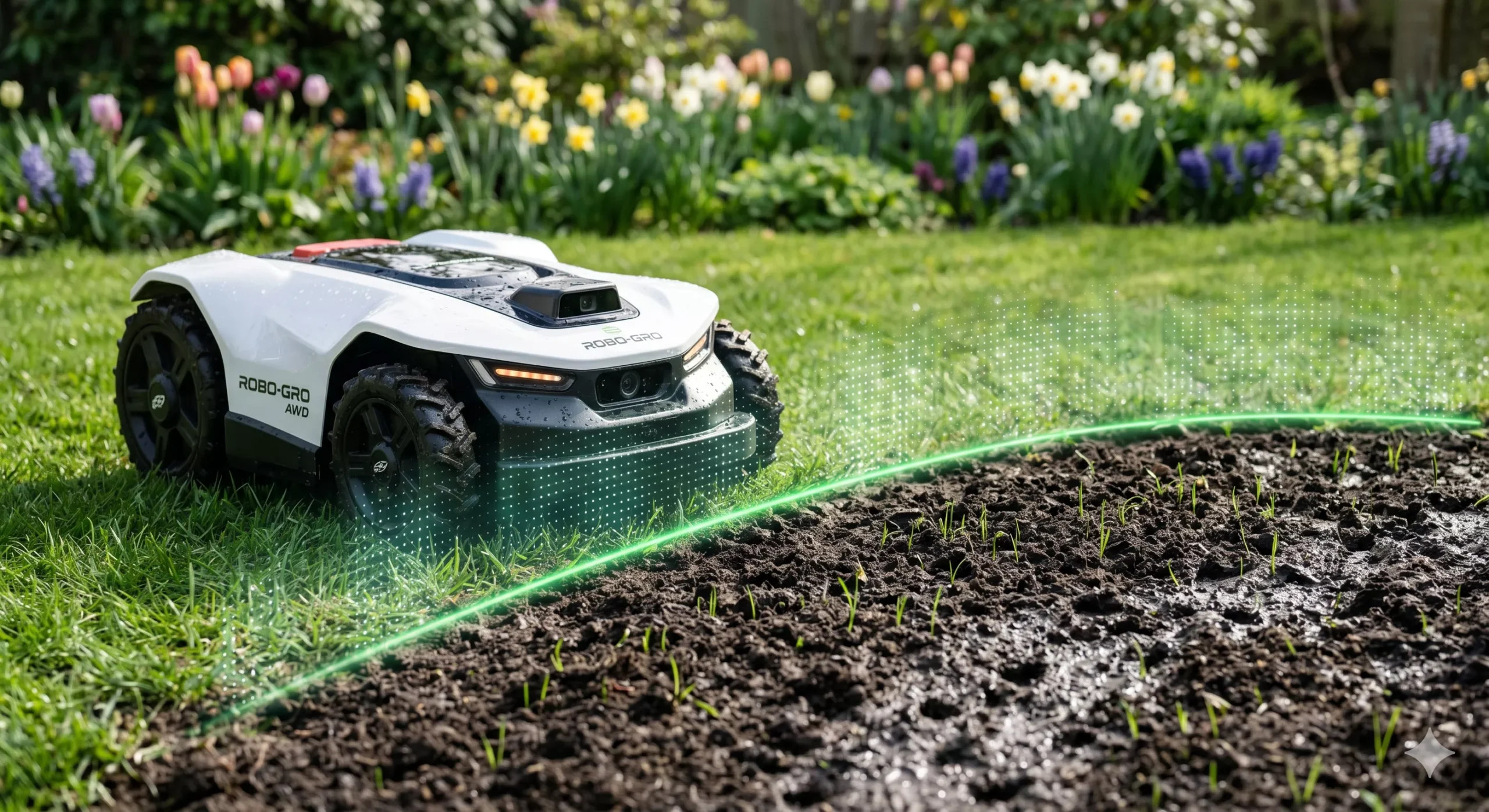
It is mid-April. You just spent your entire weekend aggressively raking out winter moss from your front lawn, aerating the soil, and laying down a fresh, expensive layer of premium grass seed.
Now, you are looking at your $2,500 AWD robot lawn mower sitting in the garage. The rest of the yard is waking up and needs a trim, but you are terrified of what those aggressively treaded wheels will do to your delicate new seedlings.
So, can you use a robot mower on new grass?
The short answer is NO. Not immediately. Letting a heavy robot mower roam freely over a newly overseeded lawn is the fastest way to destroy your hard work.
However, you don’t have to put your robot away for the entire spring. With the advanced app features on 2026 models, you can easily manage the rest of your yard while protecting your new grass. Here is the ultimate timeline and strategy for managing a robot mower during spring lawn restoration.
The Danger: Why Robots and Seeds Don’t Mix
You might think that because robot mowers use tiny, razor-like blades, they are gentler than heavy gas-powered riding mowers. While they don’t create the massive “vacuum effect” that sucks seeds into a bagging chute, they present a completely different physical threat: Traction.
Modern wire-free mowers (like the Mammotion Luba 3, Dreame A3, or MOVA LiDAX) are heavy beasts. An AWD model can easily weigh 40 to 50 lbs. When those knobby, off-road tires make a zero-degree turn on bare, moist topsoil, they act like a mini rototiller. They will physically grind the fragile newly sprouted grass roots into the mud, permanently killing the seedlings before they ever have a chance to establish a canopy.
The 2026 Mowing Timeline for Overseeded Lawns
To protect your investment in grass seed and fertilizer, you need to follow a strict timeline.
Phase 1: The Incubation Period (Weeks 1 to 3)
- The Goal: Let the seeds germinate without any physical disturbance.
- Robot Mower Action: STRICT BAN. Do not let the robot touch the seeded area.
How to do this with an RTK GPS Mower: If you have a modern vision or RTK-guided mower (Segway Navimow, Luba, Yuka), this is incredibly easy. Open your smartphone app and draw a temporary “No-Go Zone” (or restricted area) directly over the patches of your front lawn where you removed moss and planted seed. The mower will perfectly maintain the healthy parts of your yard and completely ignore the dirt patches.
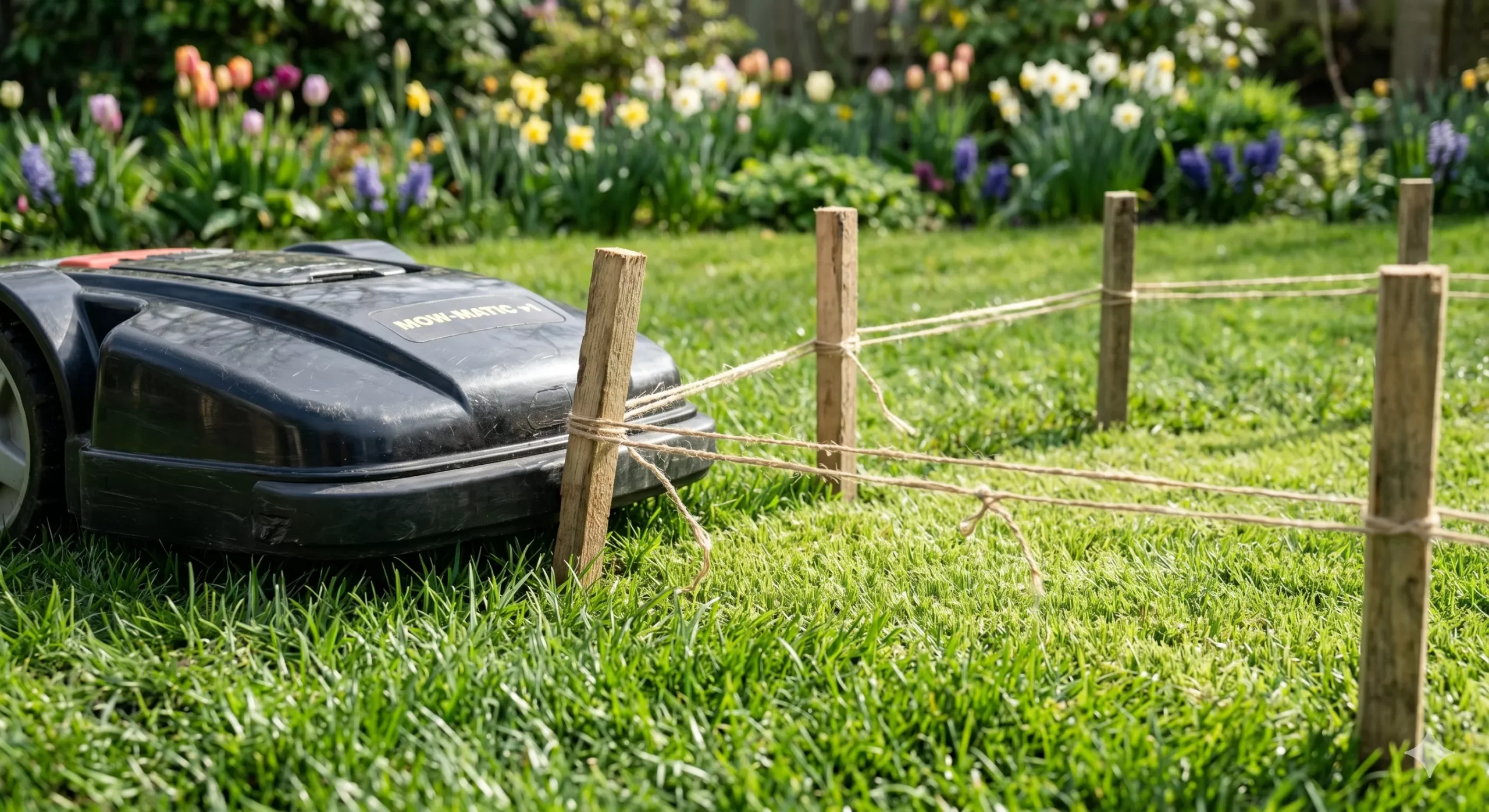
How to do this with a Perimeter Wire Mower: If you own a Husqvarna Automower, you cannot just draw a digital box. You must create a physical barrier. The easiest method is to buy a few cheap wooden stakes and a roll of landscaping string. Tap the stakes into the ground around the seeded patch and wrap the string about 5 inches off the ground. When the mower bumps the physical string, its bump sensor will trigger, and it will turn around.
Phase 2: The First Cut (Weeks 4 to 5)
- The Goal: Encourage lateral growth without tearing the shallow roots.
- Robot Mower Action: STILL BANNED.
When the new grass reaches about 3 to 4 inches tall, it is time for the first cut. Do not use your robot mower for the first cut. The roots are still too shallow to handle the heavy, twisting wheels of a robot. Instead, pull out your old manual push mower. Make sure the blade is razor-sharp, set it to the highest setting, and gently walk the area.
Phase 3: The Robot Re-Deployment (Week 6 and Beyond)
- The Goal: Return to fully automated lawn care.
- Robot Mower Action: GREEN LIGHT (with precautions).
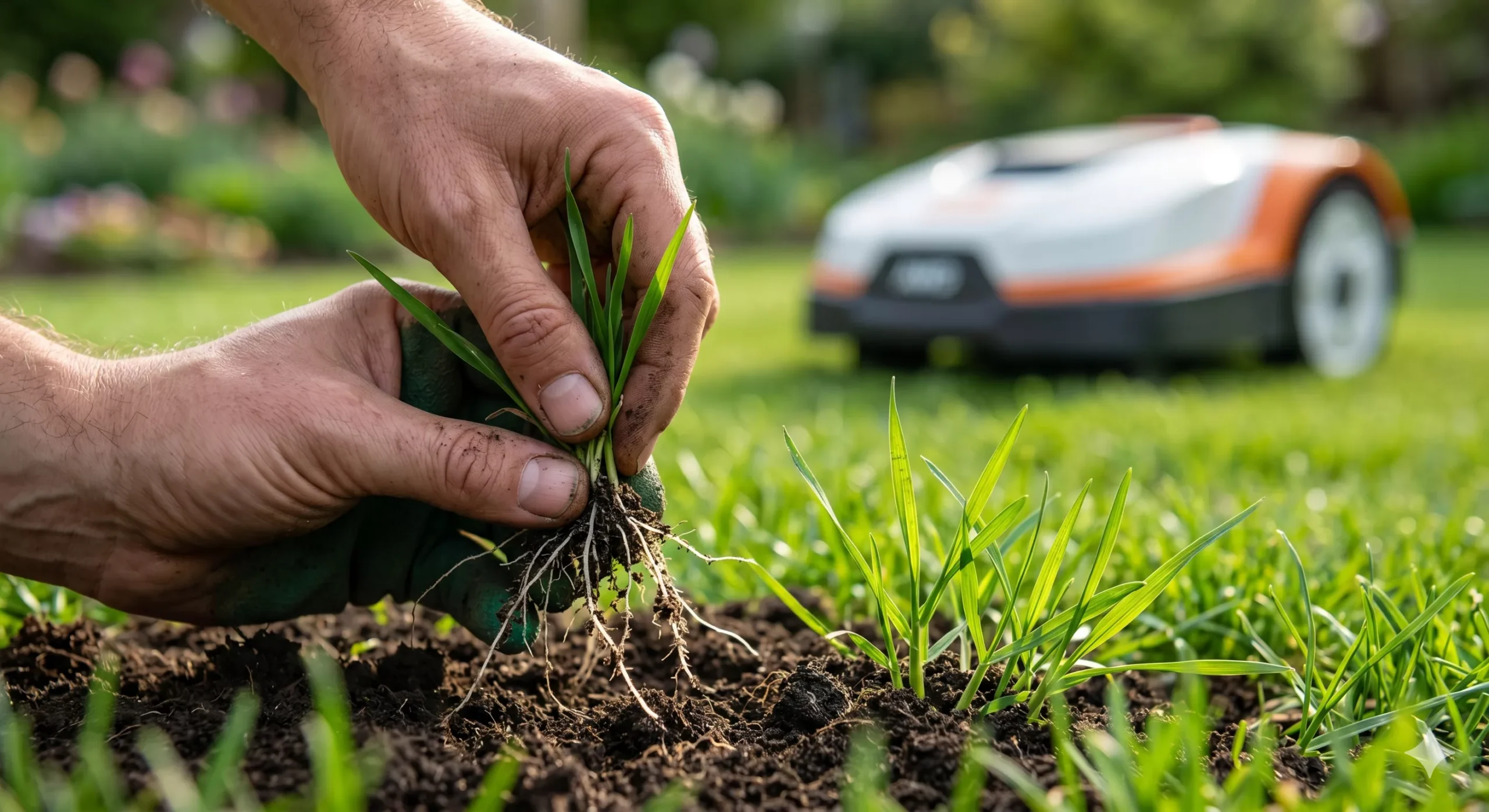
Before deleting your No-Go Zone and letting the robot back in, perform the “Tug Test.” Gently grab a handful of the new grass and give it a light tug. If it feels firmly rooted in the soil, it is ready for the robot.
Crucial Deployment Settings:
- Set the Height to MAX: When you first let the robot back onto the new grass, adjust the cutting deck to its maximum height (usually 3.5 or 4.0 inches). Let the new grass maintain a deep green canopy to shade out spring weed seeds (like crabgrass).
- Change the Mowing Pattern: If your app allows it, force the mower to use a straight back-and-forth pattern rather than a multi-point turn strategy. This minimizes the amount of twisting the wheels do on the delicate turf.
A Warning for Perimeter Wire Owners (Moss Removal)
If you are just beginning your spring restoration and you have an older perimeter wire mower, read this carefully: Do not aggressively dethatch or use a power aerator before locating your wire.
When removing heavy moss, many homeowners use aggressive metal rakes or power dethatchers. Because frost heave over the winter often pushes perimeter wires closer to the surface, one swipe of a heavy rake will slice your boundary wire in half.
Always unplug your base station and trace your wire before doing heavy mechanical work on your lawn!
🌱 Spring Overseeding Quick Guide
- Do not let robots drive on bare seed: Heavy off-road tires will crush and bury seedlings.
- Use App Features: Draw temporary “No-Go Zones” over your freshly seeded patches.
- Manual First Cut: Use a traditional push mower for the very first cut at 3-4 inches tall.
- Pass the Tug Test: Once the roots are firmly established (around week 6), delete the No-Go zone and let the robot take over at its max height setting.