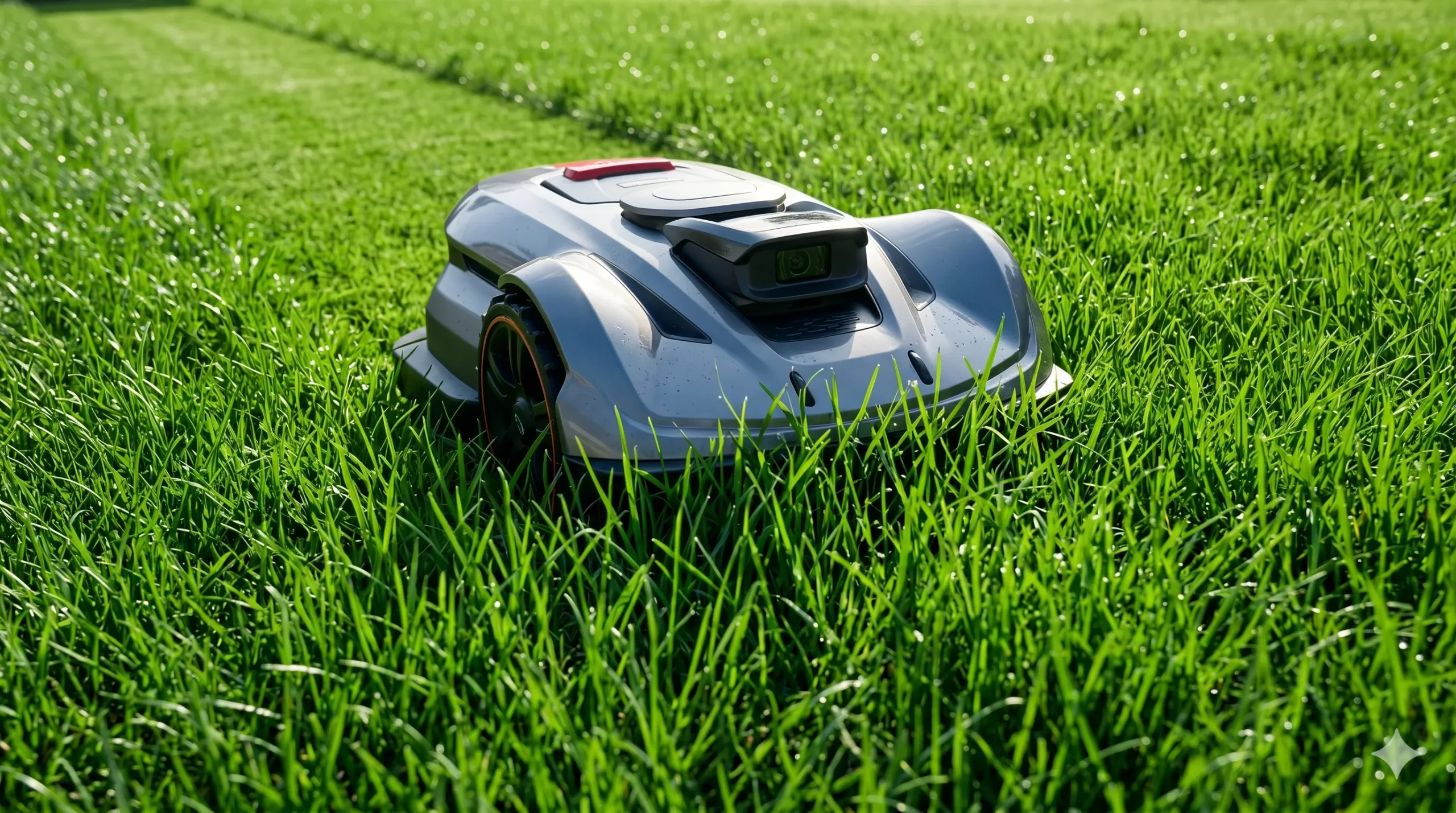
May has arrived. The heavy spring rains have rolled in, temperatures are steadily climbing, and your lawn has officially entered the “Spring Surge.” If you walk outside in the morning, it probably feels like your grass is growing an inch overnight.
While robotic lawn mowers are incredible labor-saving devices, May is the hardest month for them to operate. Thick, rapid-growth turf combined with constant moisture is a recipe for clogged cutting decks, spinning tires, and messy clumps of dead grass left on your lawn.
If you are running the exact same mowing schedule now that you used in late March or early April, you are setting your machine up for failure. Here is the ultimate guide to adjusting your robot mower to conquer the May grass surge.
Stop Mowing Like a Gas Mower: Increase the Frequency
The biggest mistake new robot mower owners make in the spring is treating their advanced robot like a traditional gas-powered push mower.
With a traditional mower, you wait until the weekend, let the grass get tall, and chop off 2 to 3 inches at once. If you try to do this with a robot mower during the May surge, the tiny razor blades will get completely bogged down. The mower will drain its battery twice as fast, and it will leave ugly, wet clumps of grass clippings sitting on top of your lawn, which can smother and kill the grass underneath.
The Solution: Embrace “Micro-Clipping.” Robot mowers are designed to cut a tiny sliver of grass (just a few millimeters) every single time. During the spring surge, you need to increase your mowing frequency dramatically.
- Normal Summer Schedule: 2 to 3 times a week.
- May Surge Schedule: 4 to 6 times a week (or even daily for highly fertilized lawns).
By cutting a tiny amount every day, the clippings remain minuscule. They easily fall to the soil level, quickly decompose, and feed your lawn natural nitrogen without creating messy clumps.
The Dew Dilemma: Adjust Your Time Windows
In the heat of July, sending your robot out at 6:00 AM is a great way to keep the batteries cool. In May, it is a terrible idea.
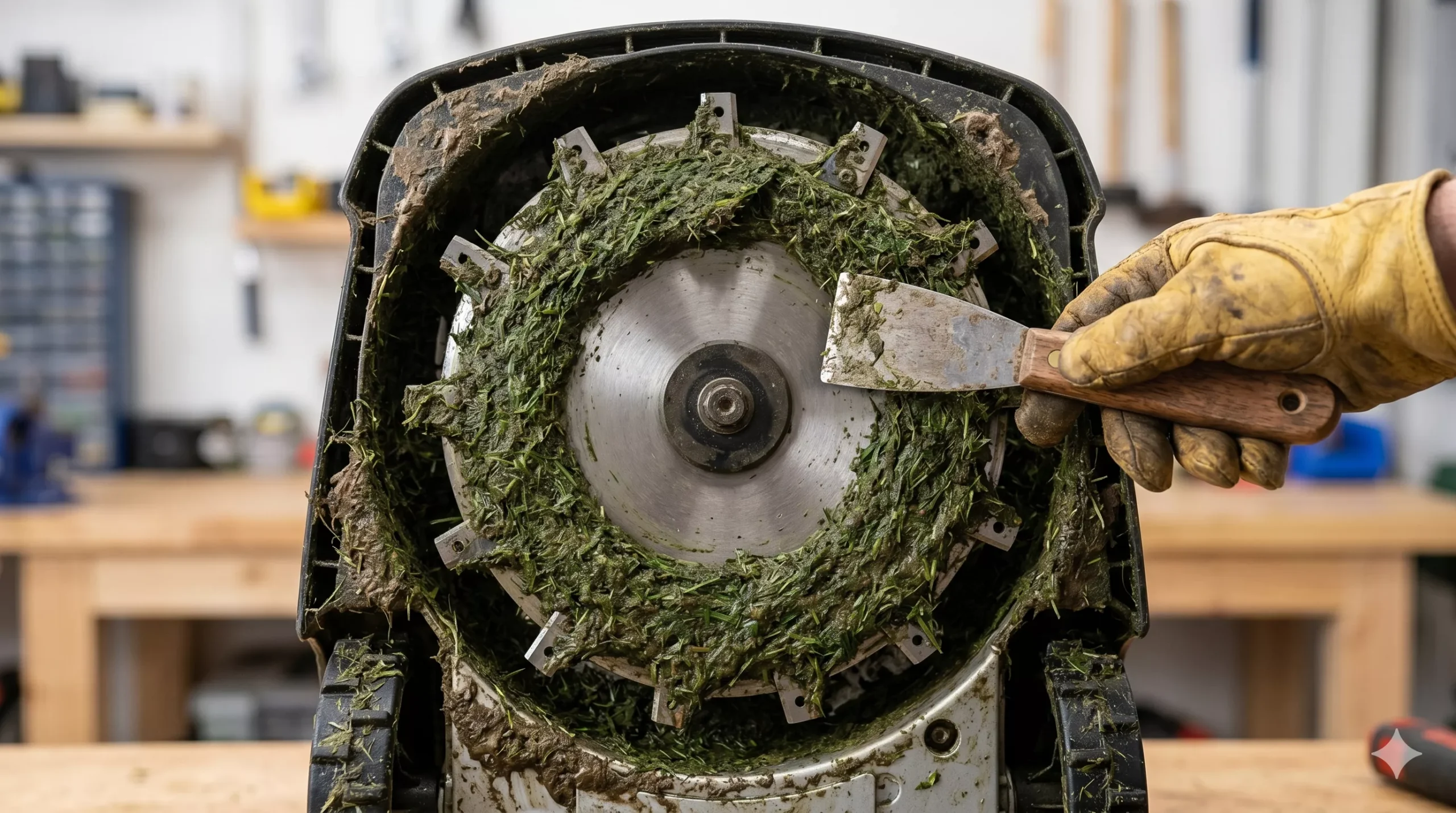
Spring mornings are notorious for heavy dew. Even if it didn’t rain the night before, the grass will be soaking wet until mid-morning. Wet grass is the ultimate enemy of a robot mower. It sticks to the underside of the cutting deck like papier-mâché, eventually blocking the blades from spinning freely and causing the “Blade Motor Overload” error in your app.
The Solution: Shift the Schedule.
- Cancel your early morning and late evening mowing sessions.
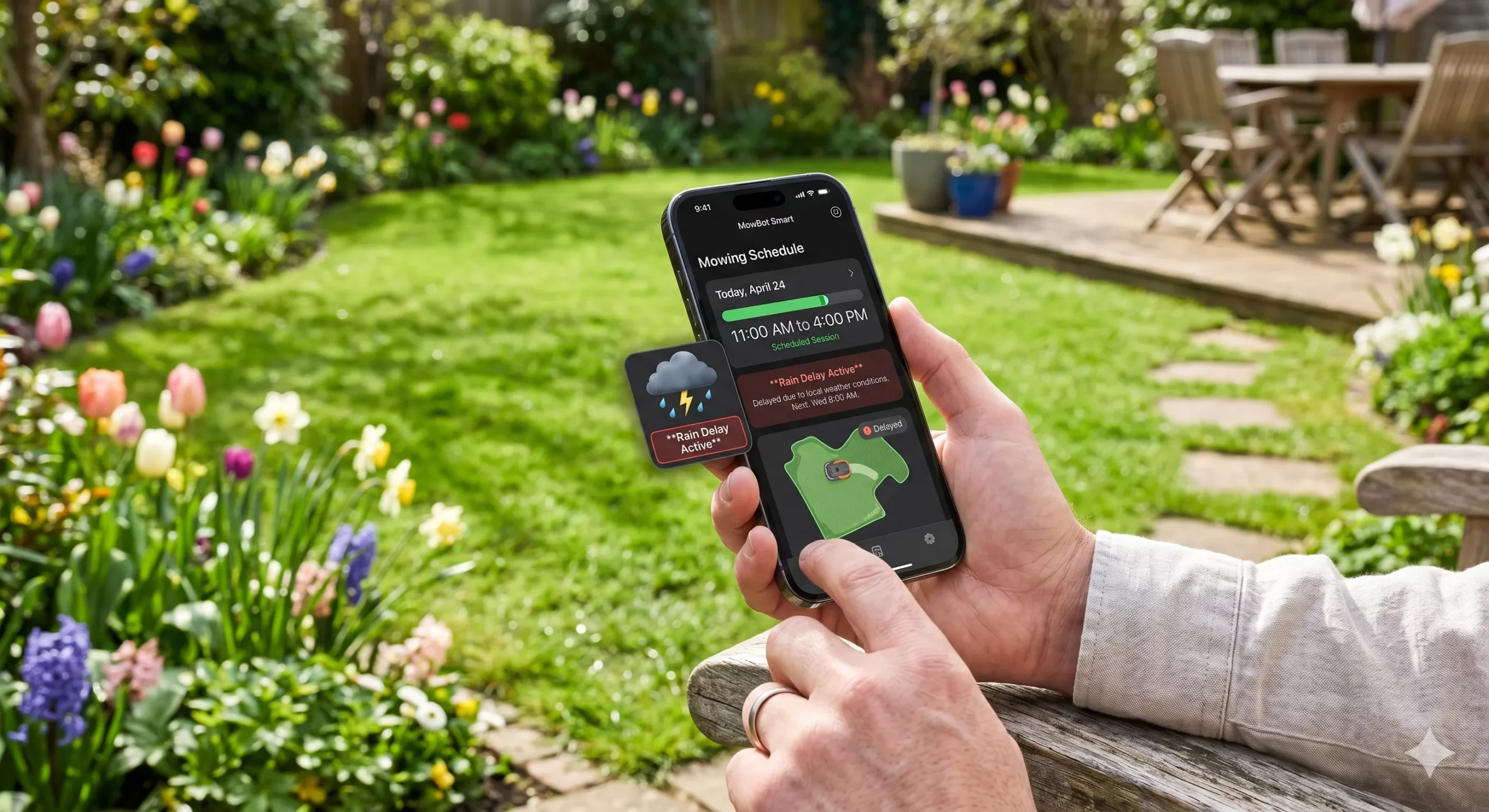
- Constrain your mower’s active hours to 11:00 AM to 4:00 PM. This gives the morning sun enough time to burn off the dew, and ensures the mower finishes before the evening moisture settles back in.
Utilize “Rain Delay” Wisely
Almost all modern premium mowers (like the Segway Navimow, Mammotion LUBA, and Dreame A1) have built-in rain sensors or pull live weather data from the internet.
Make sure your Rain Delay feature is turned ON in your app settings, but don’t just rely on the factory default. Many apps allow you to set a “resume timer” after the rain stops.
- Pro Tip: Set the delay to wait at least 3 to 4 hours after the rain ends before the mower leaves the base station. This ensures the soil has time to absorb the standing water, preventing your mower’s heavy, aggressively treaded wheels from slipping, sliding, and tearing up muddy ruts in your yard.
Raise the Deck (Just a Little Bit)
You might be tempted to lower your cutting height to the absolute minimum to “fight” the fast-growing grass. Resist this urge.
Cutting wet, surging grass too short puts immense stress on the mower’s motors. Furthermore, leaving the grass slightly taller in the spring (around 2.5 to 3 inches) helps the blades of grass develop deeper root systems, preparing them to survive the blistering heat of the upcoming summer.
If your mower features an electronic cutting deck adjustment (like the all-in-one system on the Segway X430), bump the height up by at least 0.5 inches during the rainiest weeks of May.
The Weekly Undercarriage Check
Even if you follow all the scheduling rules, some wet grass buildup is inevitable during the spring.
Once a week, put on a pair of heavy gloves, turn your robot mower completely OFF, and flip it over.
- Use a wooden paint stirrer or a plastic scraper (never use metal on the plastic deck) to clear out the caked-on green sludge from around the blade discs.
- Check the wheels for packed mud, which can ruin traction on slopes.
- Note: If you own a mower with an IPX66 waterproof rating (like the LUBA or Navimow), you can gently use a garden hose on the underside—but never use a high-pressure power washer!
- Increase Frequency: Mow 4 to 6 times a week. Cut tiny amounts, more often.
- Avoid Morning Dew: Restrict mowing schedules between 11:00 AM and 4:00 PM.
- Enable Rain Delay: Set the mower to wait 3-4 hours after rainfall before resuming.
- Clean the Deck: Flip and scrape the undercarriage weekly to prevent blade motor overload.